Posts

Solving Ecological Problems using New Technologies - Presentations

Image
*Presentation Dates - Dec 11/12/13 The Task:  In groups of two, we will use Scientific inquiry and research skills to investigate one or more solutions to an ecological problem created by humans. Solutions to the problem should involve using exciting new technologies or ideas (i.e. - Bioremediation of Oil Spills using Bacteria, Mushroom-based, biodegradable packaging). Presentations will be done using Goole Slides, Prezi or Microsoft Powerpoint. They should be very brief (2-3 minutes long). They should very clearly state the problem you are investigating, and where on Earth it is an issue. You should cover what negative impacts your problem is having. Lastly, teach our class about one or more of THE BEST, MOST EARTH-FRIENDLY ways to solve this problem using technology or natural processes (i.e. - Bioremediation). Assessment Rubric: Using Technology to Solve Environmental Problems - Presentation Rubric Name(s):_______________________________ Teacher/Class:________...
Biomes / Adaptations - Create Your Own Organism Mini-Project

Image
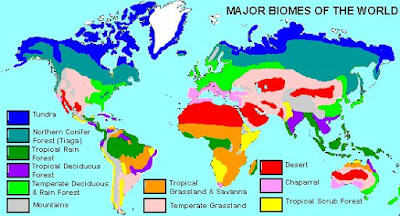
1. On the website link below, read over the five sections on Biomes (Aquatic, Desert, Forest, Tundra and Grasslands). *If you find the first website challenging to understand, please try the second link and read over sections on the same five Biomes (Aquatic, Desert, Forest, Tundra and Grasslands). 2.  As you read, make notes in your Science journals on the major survival challenges faced by organisms living in each of the Biomes. http://www.ucmp.berkeley.edu/glossary/gloss5/biome/index.html http://www.ducksters.com/science/ecosystems/world_biomes.php https://www.youtube.com/watch?v=0fb8143ndo8 3. SHOW Mr. Mak your notes. 4. Research unique adaptations that organisms found in each of these five Biomes have evolved to help them successfully survive. 5. Design your own unique creature with at least 5-10 adaptations that would allow it to successfully survive in any Biome on the planet. Make a poster with a sketch of the organism. Have arrows pointing to all...

Test - Study Hints

Image
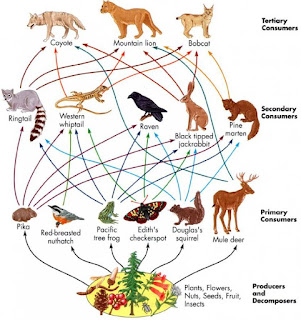
*If you need any final extra help, Mr. Mak will be available after school on Monday in the D&T room 3:15-4:00 *If you miss the test due to Athletics or illness, it is your responsibility to co-ordinate a make-up time with Mr. Mak *Look over the list below to see if you are ready for our test.  Focus on reviewing the topic you are less confident with! -Explain what an ecosystem is (video/questions) -Explain what biotic and abiotic factors in an ecosystem are, with examples (video/questions) -Explain what producers, consumer (primary secondary, tertiary), decomposers and scavengers are (video/ questions) -Explain what herbivore, carnivores and omnivores are (video/questions) -Understand the differences between food chains, food webs and food pyramids (class notes, video/questions) -Identify producers, consumers, apex predators on a food web (video/question) -Explain what an invasive species is and the negative impacts they can have on food webs (presentati...

Scientific Method / Introduction to Lab Reports / Rotocopters

Image
*Quick reminder that our unit test will be on Tuesday November 7, 2017 (Ecosystems, Photosynthesis, Water Cycle, Carbon Cycle, Microscopes, Scientific Method). I will post some study hints next week.... *Rotocopters/Scientific Method Lab Report is due to Mr. Mak by Wednesday, November 8, 2017 Rotocopter Mini-Lab Report – Introduction to Using the Scientific Method 1.      Briefly explain what the Scientific Method is. 2.      List the key steps in the Scientific Method. 3.      Write out the Question or Problem you will be investigating. 4.      Write down the Hypothesis/Prediction of what you think will happen for each of your new rotocopter designs. *Include one hypothesis per Rotocopter design (i.e. - you need two hypotheses) 5.      List all Materials you will need. 6a)      Write out the Procedure you will follow,...

Water & Carbon Cycle / Energy in Ecosystems / Succession Questions

Image
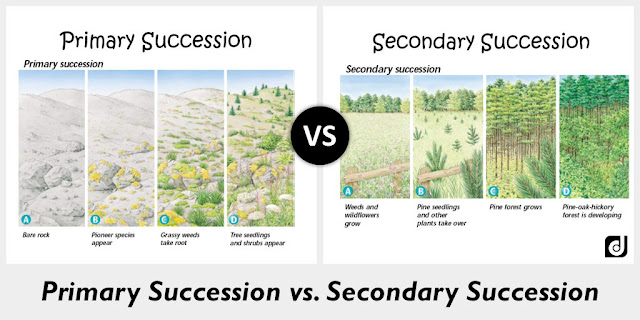
*If you did not complete these in class, you may sign out the "mini-textbook" for one evening *Due to Mr. Mak by Tuesday, Oct 31! 1) Read 36-37, answer page 38 #1,2 2) Read 38-39, answer page 40 #1,2,3, pg. 43 #4,5 3) Read 52-52, answer page 54 #1,2,3 4) Read page 55, then match the animal(organism) to the appropriate Biome Water Cycle Videos: https://www.youtube.com/watch?v=al-do-HGuIk https://www.youtube.com/watch?v=jFjI6y46QRk *For any budding Scientists at JSB, there is a FREE weekly lecture I highly recommend checking out with your family. The information is linked below: http://rciscience.ca/lectures/ fall-2017-rciscience-talks/

Review Games for Producers, Consumers, Decomposers and Food Chains

Image
Producer, Consumer or Decomposer? Decomposers video: https://www.youtube.com/watch?v=Z6V0a_7N1Mw Try the Producers, Consumers and Decomposers Game, as well as the Food Chains Game for some fun review of concepts! http://www.sheppardsoftware.com/science.htm If you're interested in some of what you've seen the Grade 8's learning about, try the games linked below! http://www.sheppardsoftware.com/health/anatomy/cell/index.htm What would "Google" do if it could redesign part of Toronto's waterfront? Check out the article below and find out! https://beta.theglobeandmail.com/news/toronto/google-sidewalk-toronto-waterfront/article36612387/